To prepare the pan: Grease (ideally with butter) the bottom and sides of an 8" round cake pan that's at least 2" deep.
Cut a standard half sheet (16 1/2" x 12 1/4") piece of parchment into 4 strips: two 16 1/2" x 4" strips and two 16 1/2" x 2" strips.
Grease the two 2" strips, then crisscross them in the center of the pan, greased sides down, so they make a “+”. Press them into the edges and up the sides.
Line the bottom of the pan with an 8" round piece of parchment and grease (again, ideally with butter).
Grease one side of each of the 4" strips of parchment, then place them with the greased sides facing inward along the inside edge of the pan to create a collar that extends past the rim. (The strips will overlap.) Set the prepared pan aside.
To make the meringue: In a large clean bowl of a stand mixer fitted with a whisk attachment or working with an electric hand mixer, beat the egg whites on medium speed until foamy, 1 to 2 minutes.
With the mixer running at medium speed, gradually pour in the sugar. Once you have added all the sugar, increase the speed of the mixer to high, and whip until soft to firm (but not stiff) peaks form, about 1 to 2 minutes longer. Set the egg whites aside.
To make the cream cheese base: Set a large saucepan with 1" of water over medium-high heat and bring to a gentle simmer.
Set a large heat-safe bowl over the pan of simmering water and add the cream cheese, butter, cream, and sugar. Gently heat the ingredients, whisking regularly, until they come together into a smooth batter. Remove the bowl from the heat.
Add the egg yolks one at a time, whisking to incorporate each one before adding the next.
Sift the cake flour through a fine-mesh strainer into the bowl of batter, then whisk to incorporate.
Pour the batter through a fine-mesh strainer into a clean bowl. Discard any solids.
Whisk the lemon zest and juice into the batter until evenly incorporated.
Using a whisk, fold 1/3 of the meringue at a time into the batter until no white streaks remain. (A whisk, rather than a spatula, incorporates the egg whites more evenly and in fewer strokes.)
Pour the batter into the prepared pan, then place the cake into the water bath in the oven.
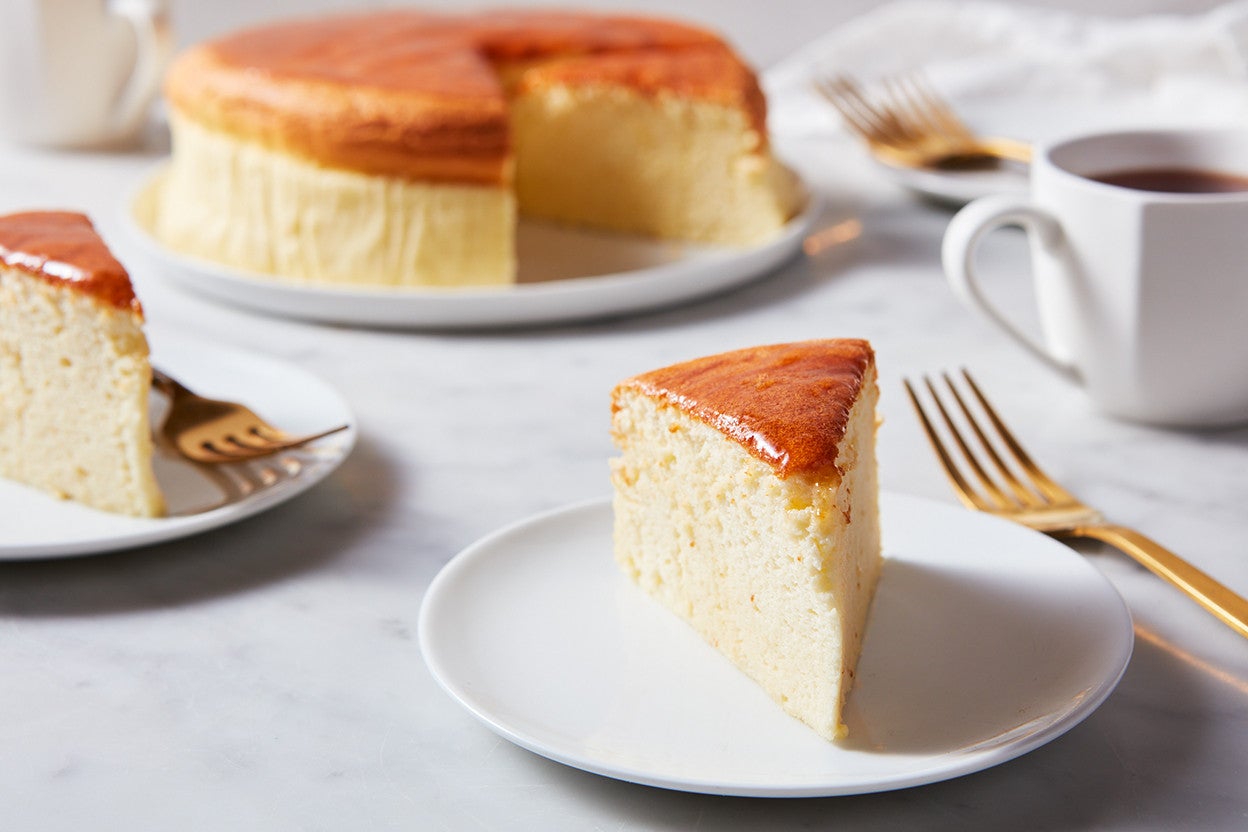
Bake the cake for 50 to 60 minutes, until the top is golden brown and set; a skewer inserted into the center of the cake will come out clean.
Turn the oven off and open the door. Leave the cake in the oven with the door ajar for 20 minutes, then transfer it to a wire rack to cool; the cake will shrink and that’s OK.
When the cake is cool enough to handle, use the overhanging parchment strips to carefully remove the cake from the pan and onto a wire rack. (An extra set of hands is especially helpful here.)
To make the glaze: In a small bowl or liquid measuring cup, combine the jam and lemon juice, then press through a fine-mesh strainer into a clean bowl.
Peel the parchment away from the sides of the cake. Wedge an offset spatula or thin knife between the bottom of the cake and the bottom parchment round, then gently slide the parchment away from the cake. Transfer cake to a serving platter.
Carefully spread the strained glaze over the warm cheesecake.
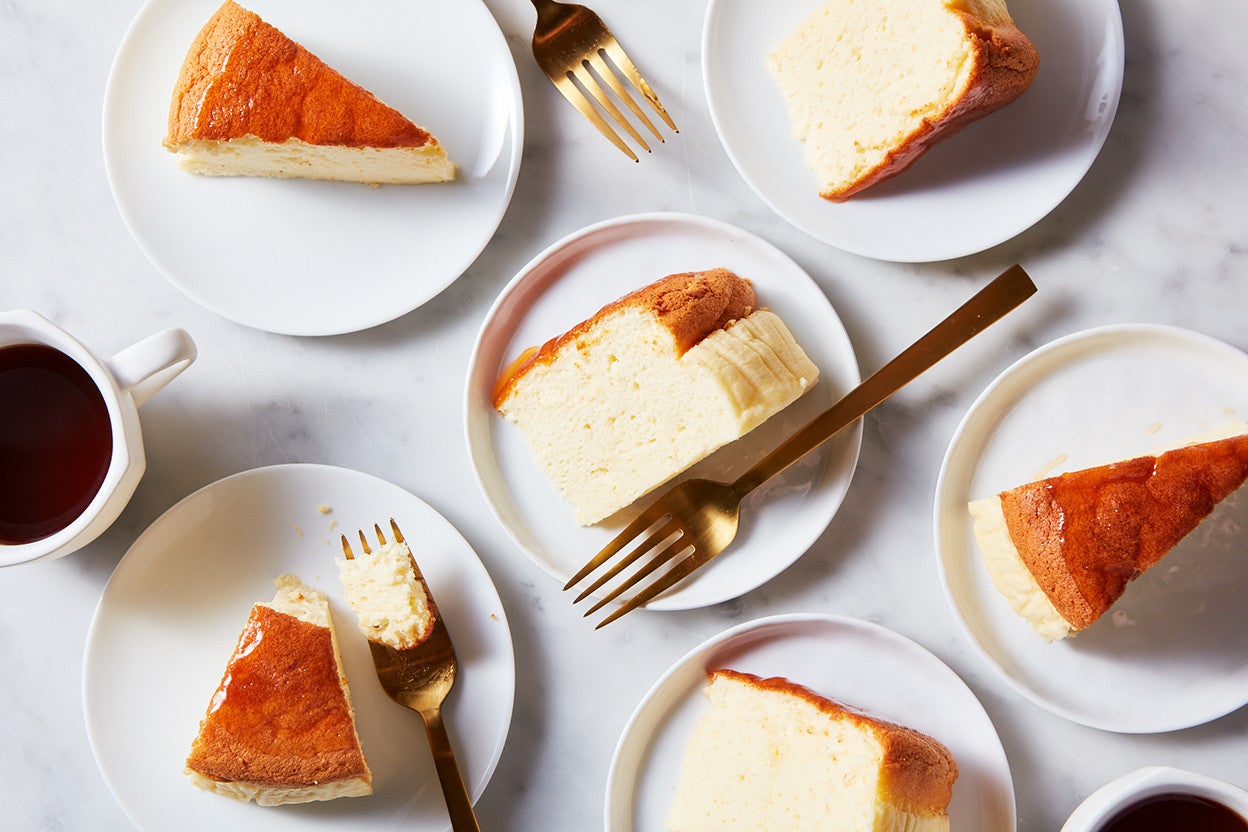
Serve the cheesecake warm, at room temperature, or chilled without any accompaniments (at least initially to experience the pure flavor and unique texture). When served warm, the Japanese cheesecake is fluffy and sponge cake-esque, with a lemon-forward flavor; when served chilled, the cake is creamier, with a more pronounced cream cheese tang.
Storage information: Store the Japanese cheesecake covered in the refrigerator for up to 1 week. You can freeze the cake for up to 1 month. Enjoy it partially frozen — again, it’ll have a different texture — or defrost overnight (8 to 12 hours) in the refrigerator.